Few gardening topics cause more anxiety than pruning native plants. Australia has a persistent myth that natives should never be touched, left to grow wild and woolly as they would in the bush. The result is visible in gardens across Sydney: leggy grevilleas with bare ankles, callistemons that flower only at the very top, and westringias that collapsed open in the middle years ago. The truth about pruning native plants in Australia is that most of them adore it. Regular, well-timed trimming keeps natives dense, floriferous and youthful for decades. The trick is knowing which plants to prune, when to do it, and, just as importantly, when to put the secateurs down.
Why Pruning Native Plants in Australia Is Different
In the wild, many Australian plants are pruned constantly, just not by people. Browsing wallabies, wind, and periodic fire all remove growth and trigger fresh shoots. Garden natives miss out on all of that, which is why an untouched grevillea often looks so much scruffier at ten years old than its bushland cousins. When you tip prune a native, you are standing in for the wallaby.
The other difference is where natives can regrow from. Many European shrubs will reshoot happily from bare old wood. Plenty of natives will not. Cut a mature westringia or grevillea back to leafless grey branches and it may simply die. The golden rule for most species: always leave green growth below your cut.
The Core Technique: Little and Often
Forget dramatic annual butchery. The healthiest native gardens are shaped by light, frequent tip pruning. Removing the top 50mm to 100mm of soft growth after each flowering flush forces the plant to branch, and every cut stem becomes two or three. Over a few seasons this builds the dense, rounded forms that look so good in designed landscapes and provide such excellent small-bird habitat.
A simple rhythm to remember: prune after flowering, never before. Most natives set their next display on the growth they make immediately after the current one finishes. Trim a spring-flowering plant in winter and you have thrown away the show.
Plant-by-Plant Pruning Guide
Grevilleas
Tip prune young plants from day one to build a good framework. For long-flowering hybrids like Grevillea ‘Robyn Gordon’ (around 1.5 metres tall and wide, full sun, well-drained soil), remove spent flower stems and trim lightly several times a year rather than once heavily. Cut just above a healthy leaf node and stay out of bare wood.
Why we love pruned grevilleas: a regularly tipped ‘Robyn Gordon’ becomes a dome of flowers with ten times the bird traffic of a leggy one.
Bottlebrushes (Callistemon)
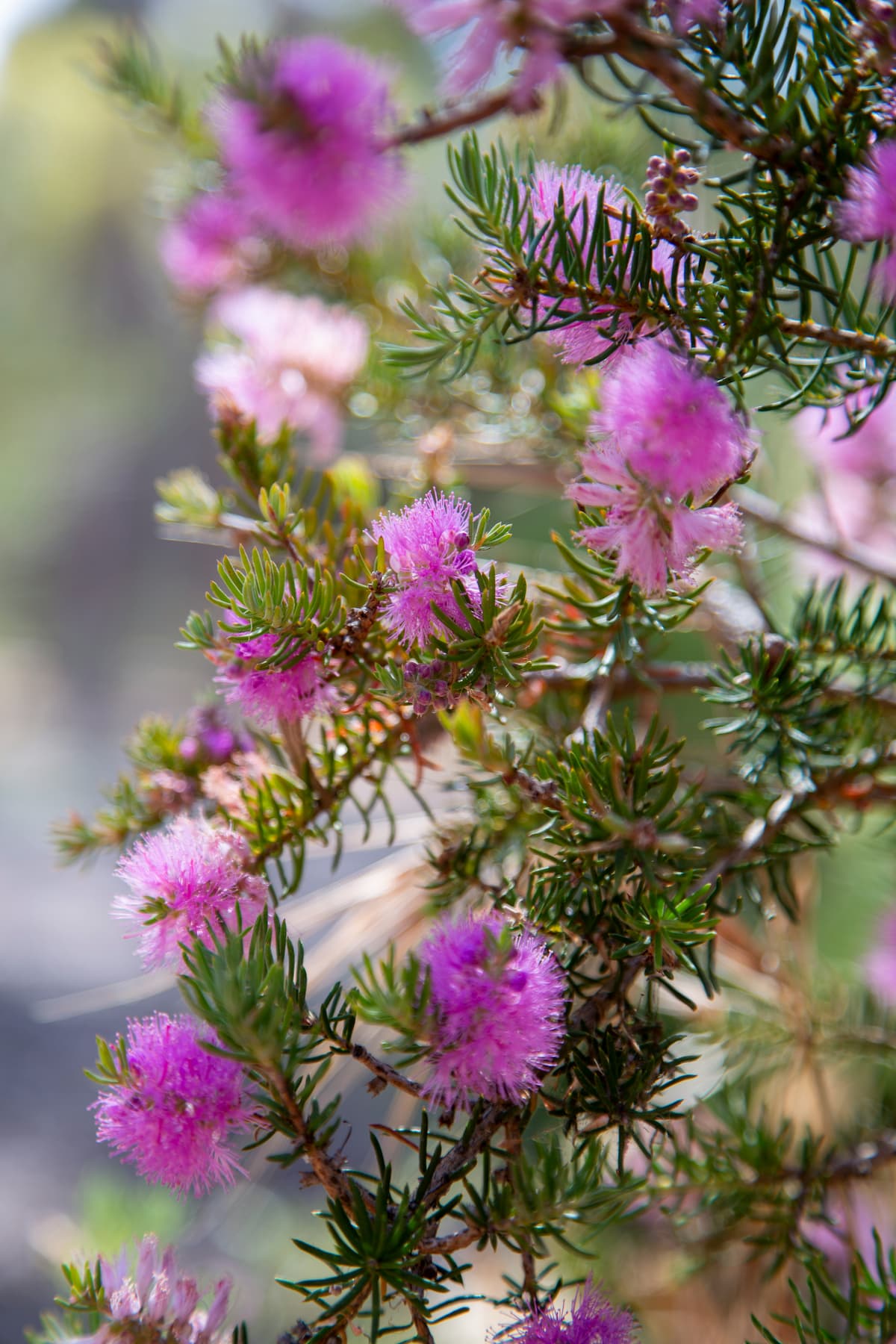
Callistemons carry their new buds directly behind the spent brush, so the technique is wonderfully simple: as each flower fades, cut immediately behind it, removing the developing seed capsules. This one habit doubles next season’s display. Callistemons are also among the few natives that tolerate genuinely hard renovation, reshooting from old wood if an overgrown specimen needs a full reset in late winter.
Westringia and Correa
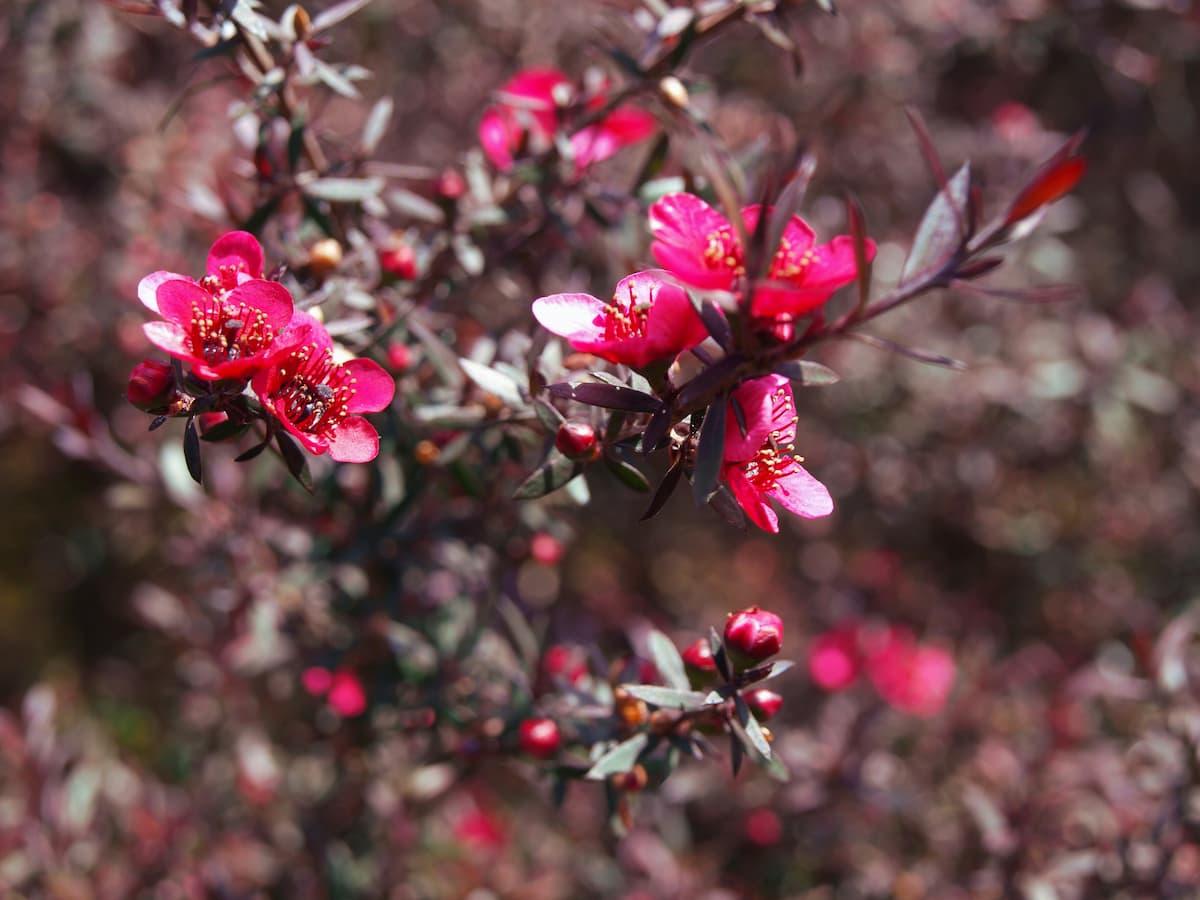
Coastal rosemary (Westringia fruticosa, to 1.5 metres, any well-drained soil in sun) is the classic hedging native and takes shearing beautifully, provided you clip little and often so you are always cutting into leafy growth. Correas (mostly under 1.5 metres, happy in part shade) need only a light all-over trim after their autumn and winter flowers finish. Both plants repay a twice-yearly tidy with years of dense, cushiony form.
Banksias
Most banksias need little more than the removal of spent flower spikes and any dead wood. Species with a lignotuber, such as many forms of Banksia spinulosa, can be cut back harder if needed, while those without one, including Banksia ericifolia, should never be pruned into bare wood. When in doubt, trim lightly just behind the old flower.
Kangaroo Paws and Strappy Plants
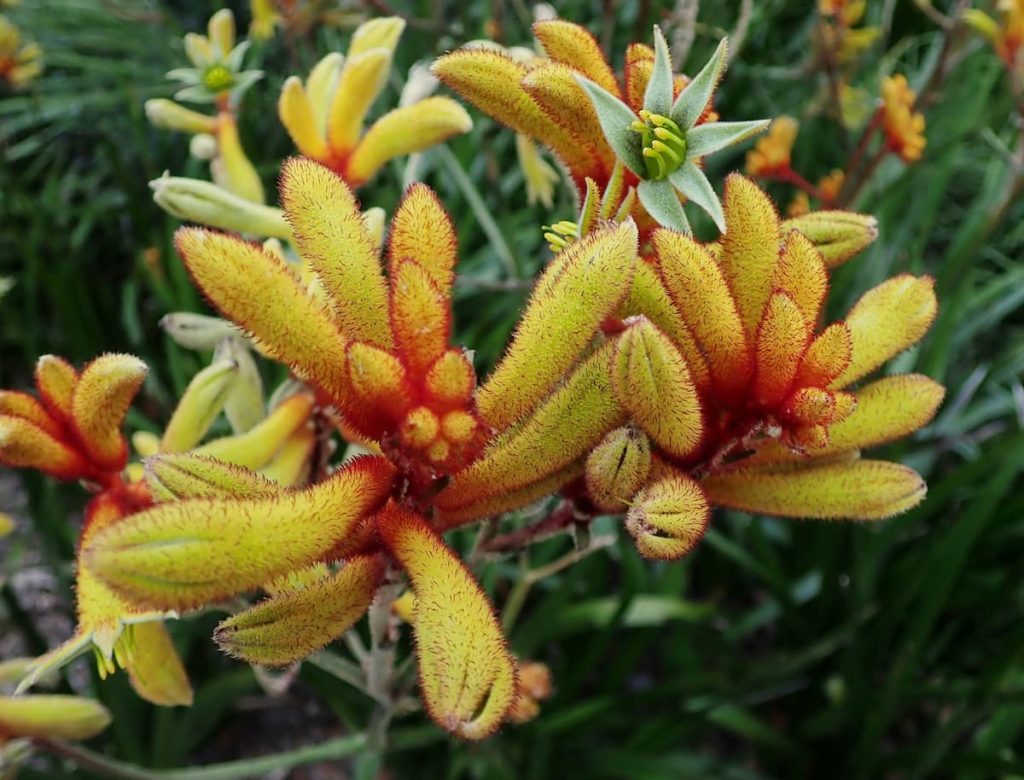
For kangaroo paws (Anigozanthos), cut spent flower stems right at the base, and remove old, blackened or ink-spotted leaves at ground level. Vigorous clumping plants like lomandra and dianella can be cut back by half, or even to 150mm for lomandra, in late winter every few years to refresh tired foliage.
Flowering Annual-Style Natives
Short-lived showstoppers such as Crowea saligna and paper daisies respond brilliantly to a trim of roughly one third after flowering. It is the difference between a plant lasting three years and lasting eight.
When Not to Prune
Knowing when to stay inside with a cup of tea is half the skill. Avoid pruning:
- During heatwaves or drought stress. Pruning triggers soft new growth that scorches in extreme heat and demands water the plant cannot spare.
- Just before winter in frost-prone parts of Western Sydney. Tender regrowth is the first thing frost burns.
- Immediately before flowering. If you missed the post-flower window, wait for the next one.
- Into bare wood on grevilleas, westringias, boronias and most banksias. If there are no leaves below the cut, the branch may never reshoot.
- Grass trees (Xanthorrhoea) and tree ferns, beyond removing completely dead fronds. Their growing points are precious and easily damaged.
- When birds are nesting in the shrub. Dense natives are prime real estate for wrens and finches; check before you clip in spring.
Rescuing an Overgrown Native
What about the shrub that missed its trims for a decade and now sprawls, half bare, across the path? The answer depends entirely on the species. Callistemons, melaleucas, lilly pillies and most correas can take staged renovation: remove a third of the oldest stems at the base in late winter, let the plant respond through spring, then repeat over the following two years until the whole framework is young again. This keeps the plant alive and screening while it rebuilds.
For the no-bare-wood group, grevilleas, westringias and boronias among them, be honest about the odds. If there is still healthy foliage well down the branches, you can shorten into that leafy zone and gradually re-densify with tip pruning. If the interior is grey sticks with a green skin on the outside, replacement is usually faster, cheaper and far better looking than a slow, doubtful recovery. A young plant tip pruned from its first season will overtake a butchered veteran within two years, and you get to choose an improved cultivar while you are at it.
Tools and Hygiene
Sharp bypass secateurs handle ninety per cent of native pruning, with hedge shears for westringia and loppers for renovation work. Clean blades matter more than gardeners realise: wipe them with methylated spirits between plants, especially after cutting anything diseased. Ragged cuts from blunt tools invite dieback, and myrtle rust is a real concern on lilly pillies and other Myrtaceae in Sydney, so bag and bin affected prunings rather than composting them.
Building Pruning into Your Garden Year
Rather than declaring a single pruning day, let the plants set the schedule: each one gets its trim as its flowers fade. Spring bloomers get attention in early summer, autumn performers in winter, and fast hedges a light clip whenever they blur at the edges. We covered how these tasks slot alongside watering, mulching and feeding in our Seasonal Maintenance Tips for Your Native Plant Garden, which pairs well with this guide as a full-year playbook.
Good pruning is also a design act. The dense forms it creates are what make the contemporary native gardens in The Beauty of Australian Natives: Design Ideas for Your Garden possible: clipped westringia domes against loose grasses, layered grevillea banks, and sculptural feature plants given room to express their natural shape while everything around them stays tailored.
Confidence Comes with Practice
If you take one thing from this guide, make it this: light and often beats hard and rarely, and green growth below the cut is your safety line. Start with a single shrub this season, tip prune it after flowering, and watch how it responds. Within a year you will wonder why anyone finds pruning native plants in Australia intimidating at all. And if your garden has drifted past the point of a gentle tidy, the team at Dry Comal Creek Landscaping offers renovation pruning and ongoing maintenance across Sydney. We are always happy to bring an overgrown native garden back to its best.